

🗳️ Democracy Now Live Coverage Election Night 🗳️
Our partners at Democracy Now! are bringing us Special Live Election Night Coverage 2026, Tuesday, November 3 7pm-11pm. Real reporting from the ground. Voices from the communities most affected. Context that goes deeper than the countdown clocks. Tune in live on your radio here on WGDR, Plainfield at 91.1 FM or WGDH, Hardwick at 91.7 FM or stream at WGDR.org. Thanks to the Democracy Now! team for making this available to community radio across the country.
Our partners at Democracy Now! are bringing us Special Live Election Night Coverage 2026, Tuesday, November 3 7pm-11pm. Real reporting from the ground. Voices from the communities most affected. Context that goes deeper than the countdown clocks. Tune in live on your radio here on WGDR, Plainfield at 91.1 FM or WGDH, Hardwick at 91.7 FM or stream at WGDR.org. Thanks to the Democracy Now! team for making this available to community radio across the country.
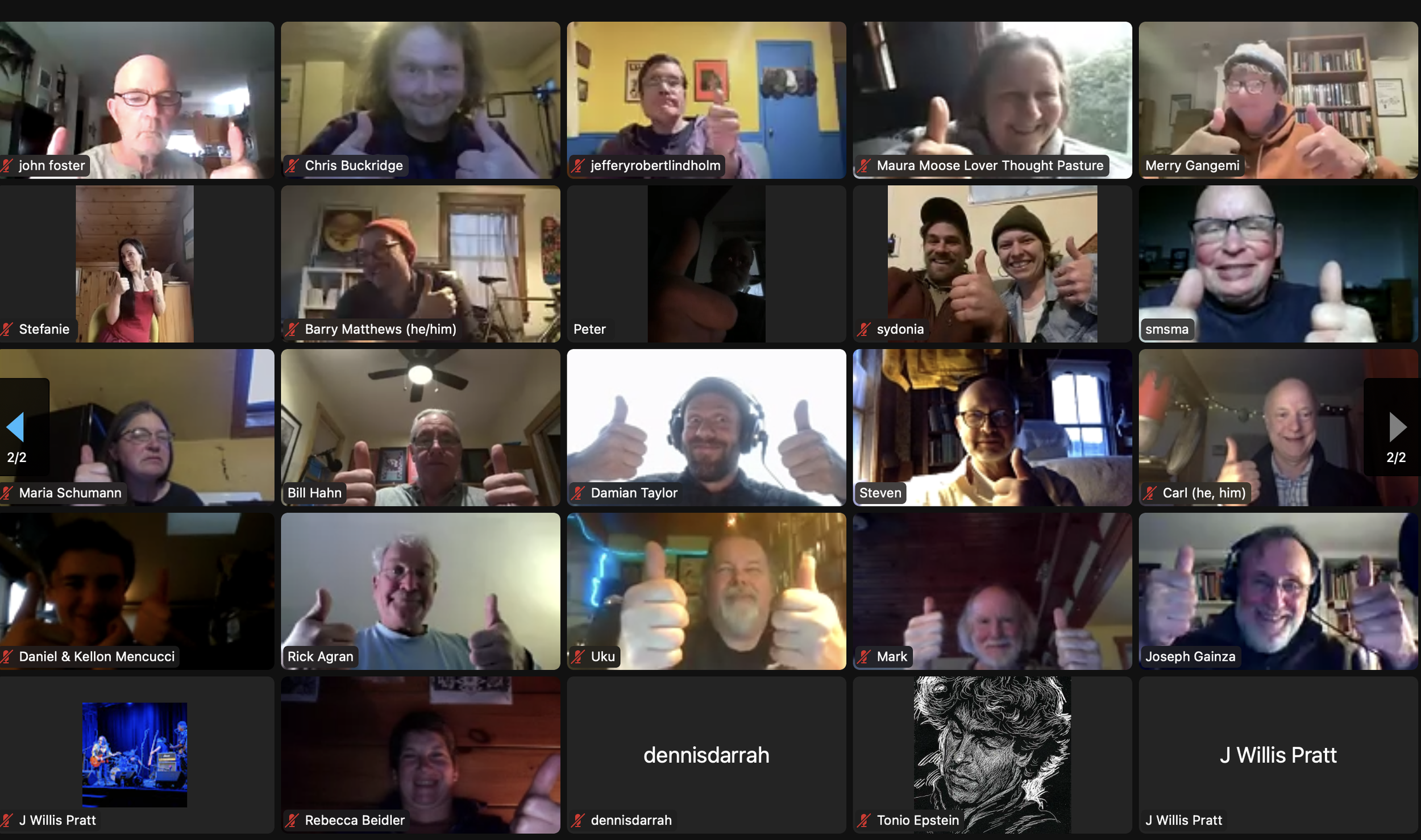
Community Forum: CVCR’s Move to Barre
Wednesday, October 28 | 6–8 PM | Zoom (registration required)
Join us for a community forum about CVCR’s upcoming move to Barre! We’ll share a brief presentation on our new space and the steps ahead, including how the community can help, as we prepare for the transition, followed by a Q&A and an open brainstorming session.
This is an opportunity to ask questions, share ideas, and imagine the new possibilities our space can offer for community radio, local voices, and community connection. We want to hear from you, the listeners and our community at large, as we shape this next chapter together!
Wednesday, October 28 | 6–8 PM | Zoom (registration required)
Join us for a community forum about CVCR’s upcoming move to Barre! We’ll share a brief presentation on our new space and the steps ahead, including how the community can help, as we prepare for the transition, followed by a Q&A and an open brainstorming session.
This is an opportunity to ask questions, share ideas, and imagine the new possibilities our space can offer for community radio, local voices, and community connection. We want to hear from you, the listeners and our community at large, as we shape this next chapter together!
There has been great excitement about our move to the Blanchard Block in Barre, alongside understandable nervousness and grief over leaving the station’s long time home on the old Goddard campus. This gathering aims to not just answer your questions, but to help everyone make space for this station transition and come together as a community to make it successful.
Due to the public nature of the meeting, we are requiring everyone to register to attend on Zoom here in advance. This prevents hacking and other disruptions to the live meeting. Plus, we can follow up with folks after if needed via email. Once you register, you will be sent info on how to sign into the meeting, including a call in option via phone.
What to Expect
Any member of the public is invited to attend, though we do require Zoom registration.
Members of the CVCR board, staff, programmers and Moving Committee will be part of the meeting to answer questions and engage in discussion with attendees. The forum will be facilitated and kept on time (we are radio people!).
There will be a 15-20 minute slide deck presentation, viewable by computer attendees only. We can make this available, along with the recording, after by request and on the WGDR.org website.
CVCR operates with the following standing Zoom participation standards:
Forums are facilitated and kept on time (we are radio people after all!). We ask that all participants be mindful of how much time they speak and allow for all voices to come into the conversation. As such, you may be asked to step back, so others can step forward. Zoom participants to be on mute unless called upon to speak, to prevent background noise and interruptions. Camera use is optional. Any meeting being recorded will be warned. This will be explained at the start of the forum.
What is this meeting on Zoom and not in person?
This meeting is intentionally being held on Zoom to allow for accommodations (closed captioning, recording for those who can’t make it, health and safety for those unable to attend larger, unmasked gatherings). We also have many, many listeners and supporters who live far from the station, as well as folks with family schedules and other limits on their ability to attend in person gatherings. Holding this on Zoom allows for us to meet the most needs possible at once.
I don’t have a computer, how can I participate?
Zoom has a call in function. However, due to online security, we are asking that folks register via email via this link. Once you do, you will get an email on how to participate in the meeting, including a call in number and meeting access codes to use.
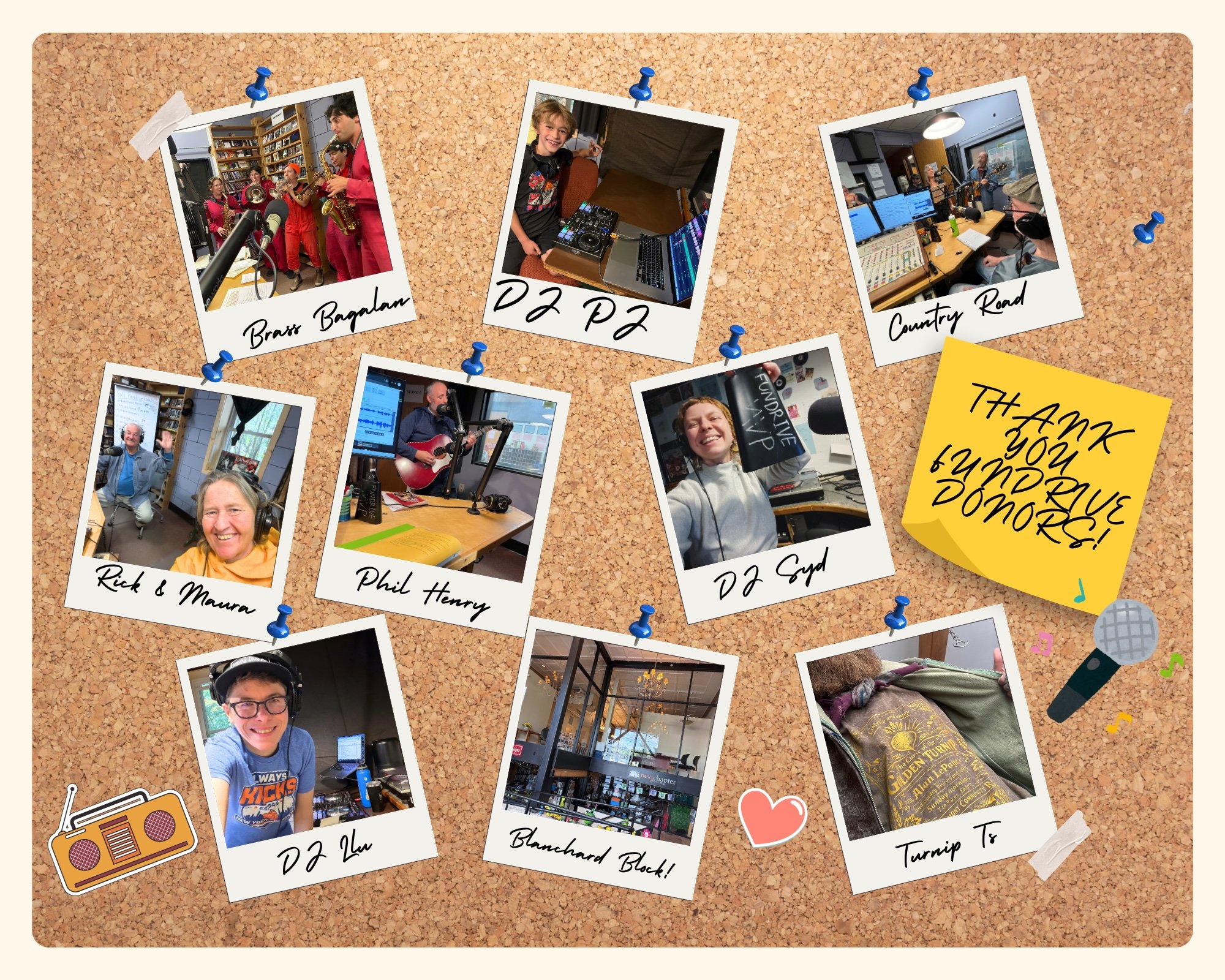
Fall Fundrive Wrap Up!
As of 10/14, we have officially reached our goal of $25,000!
Because of you, community stays at the heart of everything we do. It keeps us local, independent, and focused on you.
From all of us here at CVCR—thank you so much.
Once again, the community has stepped up during our Fall Fundrive. The outpouring of love for what we do on the air, as well as the excitement about our move to Barre, was awesome. Thank you!
Our community came together to:
Add 7 new sustainers to our 84 current sustainers
Add 45 new donors and 68 streaming donors - this helps us build up from 2% of our 45K listeners giving
192 total donors, helping us reach our goal of $25,000!
Reaching our goal of $25,000 is huge! Thank you to everyone who kicked in to help us raise so much money for the local programming we all love and rely on.
The week after a fundrive is a great time to also show our big, big gratitude to everyone who makes this place so special:
Thank you to our 63 programmers who poured their hearts into their shows, the CVCR board for their combined matching gift, and our other volunteers who help the station hum (the good hum).
Congrats to our “Fundrive MVP (Most Valuable Programmer) Award” winner Mark Michaelis - longtime host of Acoustic Harmony Saturdays at 4pm - for supporting so much love music during the drive, on his show and Boxful of Blues!
Everyone who gave to programmer show pages. Those notes you left folks raise spirits and remind folks why their shows matter. Thank you!
Our matching donors during this drive: our generous anonymous major donors and to our underwriters and other supporters at Concept 2, East Hill Tree Farm, Homeshare Vermont, Juana’s Garden, Alera Group, Onion River Campground, Rocket Leathercraft, Washington Electric Coop, Steve Pappas, and the CVCR board.
We are back to normal programming this week! Phew!

WGDR Updated Broadcast Map
Thanks to our many human reporters, we were able to get a good idea of the new WGDR, Plainfield broadcast map over the summer. While it didn’t pick up as much new area as we’d hoped, we retained nearly all the original map. Due to our lease not being renewed by the owners of Creative Campus, the move of this antenna also has preserved the future of the WGDR broadcast. We would not have had time to move the antenna in just the 6 months we’ve been given to get off campus. We saved WGDR by getting the antenna off campus in the nick of time!
Thanks to our many human reporters, we were able to get a good idea of the new WGDR, Plainfield broadcast map over the summer. While it didn’t pick up as much new area as we’d hoped, we retained nearly all the original map. Due to our lease not being renewed by the owners of Creative Campus, the move of this antenna also has preserved the future of the WGDR broadcast. We would not have had time to move the antenna in just the 6 months we’ve been given to get off campus. We saved WGDR by getting the antenna off campus in the nick of time!
The new map is different because the antenna went from being omni-directional (circle) and at 1,000 watts to a slightly directional antenna at 60 watts. These are merely estimates and we know that there is good coverage where it should be less good and less good coverage where there should be decent coverage. This is due to a number of factors that are due to terrain blockage, radio equipment quality. Anytime an antenna moves the map changes, and coverage shifts in these ways. This is not unique to WGDR!
If your broadcast coverage changed, we have some handy tips to try for your home radio set up. Check this out.
Luckily, the new FCC translator window is coming up and we are preparing to put in a few applications to continue to improve the broadcast reach to the most amount of folks in our area. Stay tuned for more!

New estimated WGDR, Plainfield at 91.1 FM coverage map as of summer 2026.

Former estimated WGDR, Plainfield at 91.1 FM coverage map.
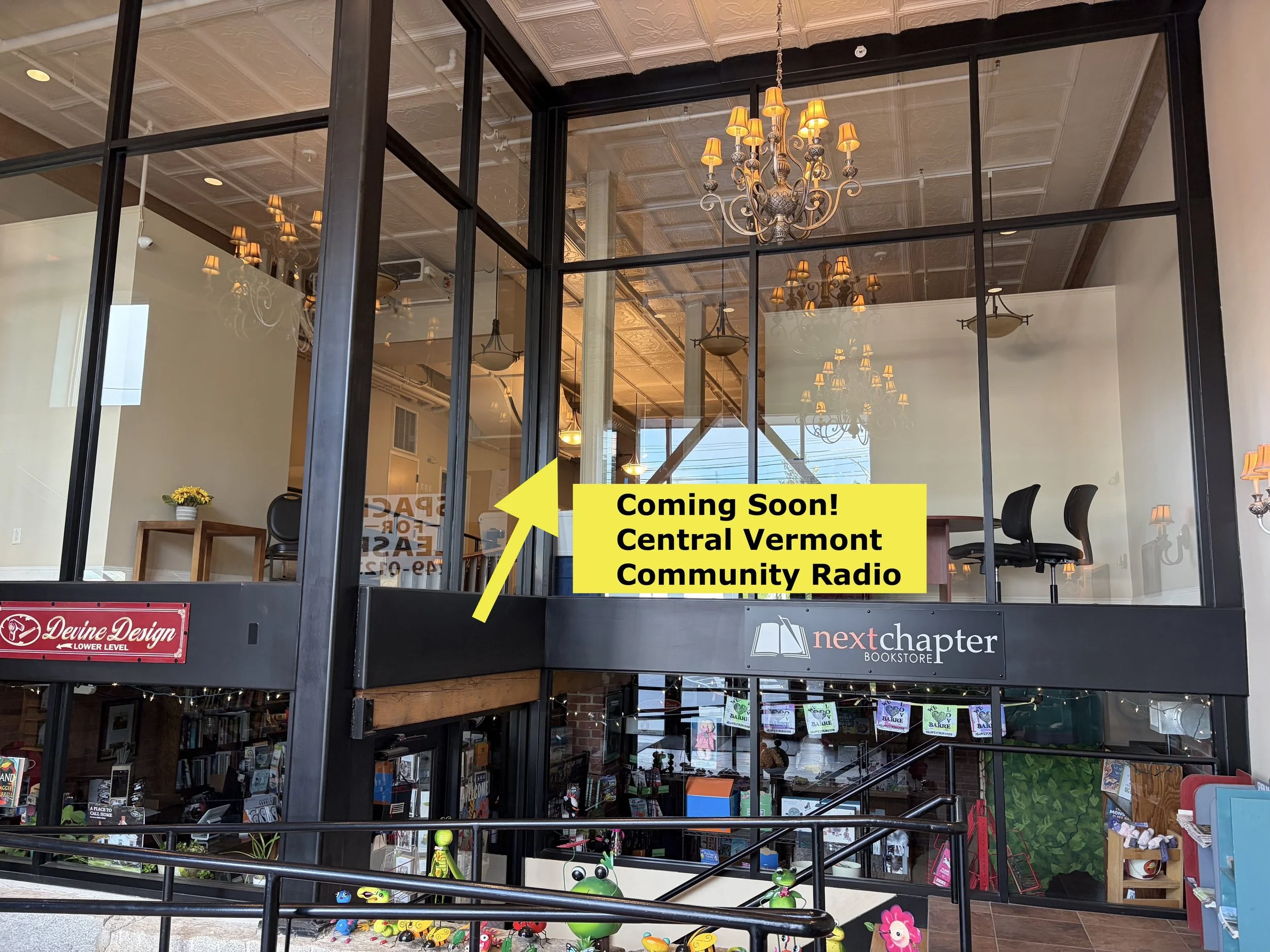
We’re on the move…to Barre’s Blanchard Block!
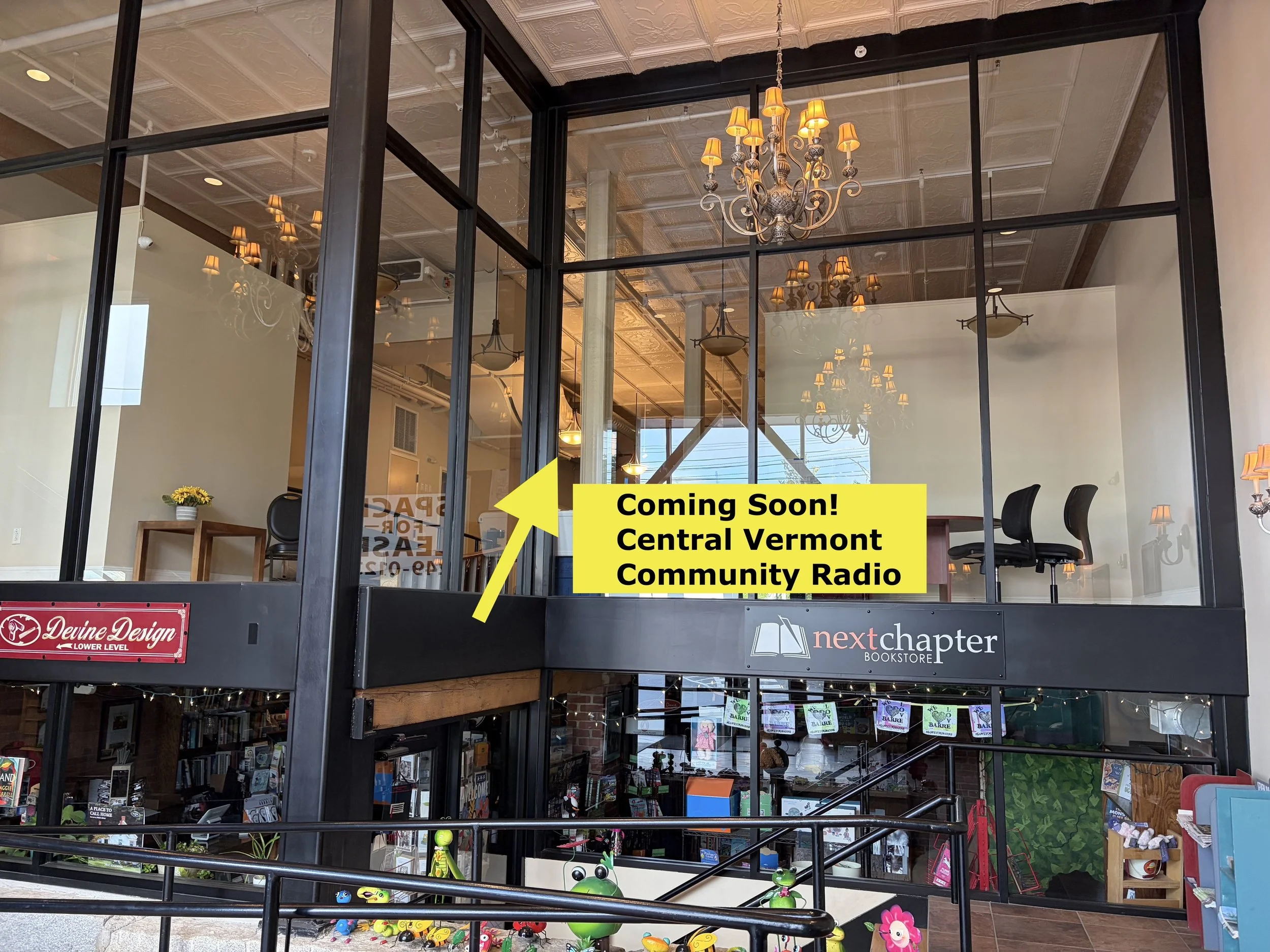
We’re so excited to share some big news: we’ve signed the lease for our new station home!
After three months of searching across Central Vermont, we’re moving to 14 North Main Street in Barre—the Blanchard Block, right next to the Barre Opera House and City Hall.
We’re incredibly grateful to be partnering with Granite City Developers, whose community-centered approach aligns so closely with our own.
We’re so excited to share some big news: we’ve signed the lease for our new station home!
After three months of searching across Central Vermont, we’re moving to 14 North Main Street in Barre—the Blanchard Block, right next to the Barre Opera House and City Hall.
We’re incredibly grateful to be partnering with Granite City Developers, whose community-centered approach aligns so closely with our own.
Our new station will be on the first floor, in the suite above the Next Chapter Bookstore, with access through the building’s rear lobby. And if you haven’t seen the Blanchard Block lately, go check it out next time you’re downtown. We think you’re going to love the space as much as we do.
There’s so much more to come about how we’ll use our new home—and we’ll be sharing those plans very soon.
For now, thank you for believing in our mission and our future. Together, we found a space that’s affordable, right in the heart of downtown Barre.
Good things happen when we come together to make them happen.
Go community radio!
Fall FunDrive Special Programming
We’ve got two+ weeks of special, creative, surprising, and delightful programming for the Spring Fundrive! This is when our programmers go above and beyond, try new things, bring in special guests, live music fills the airwaves, and we even add extra shows. We have a little of everything and we hope you enjoy it. Click through to catch the line up.
Thanks for tuning in and giving by October 11 to help us hit that $25,000 goal!
We’ve got two+ weeks of special, creative, surprising, and delightful programming coming up for you during our Fall Fundrive! This is when our programmers go above and beyond, try new things, bring in special guests and even add extra shows! Some might even have live music from the station! We have a little of everything and we hope you enjoy it.
Below is most of what we plan to do. It’s even MORE hours of locally made shows for you to enjoy. The programmers are outdoing themselves this year!
Thanks for tuning in and giving by October 11 to help us hit that $25,000 goal!
Week One: September 25 - October 3
Friday, September 25
7am-8am: Morning Mixtape with DJ Llu - Wake up and jump into a mix of music to get your morning started right!
10:30am-12pm: An extra Thought Pasture with Maura
12pm-3pm: Extended Now Playing with special guests: Bill Hahn co-hosts the first hour with DJ Llu, playing a mix of new music together. Then, Erica Heilman comes in to do another round of "Bad Advice." Call in and let us "help" you! The show wraps up with more music to get you into your Friday afternoon.
Saturday, September 26
2pm-4pm: Box Full of Blues with John Foster - TBD guest
4pm-7pm: Acoustic Harmony with Mark Michaelis - TBD guest
7-10pm: Jagler Katz Worm Hole - Extended Jagler Katz Worm Hole. Live music and more.
Sunday, September 27
7am-10am: Curse of the Golden Turnip with Alan, Steven, and Ethan - Donate $50, $100, or $150 to get limited edition Curse of the Golden Turnip merch!
2-5pm: Extended Swivel Radio with DJ Effery
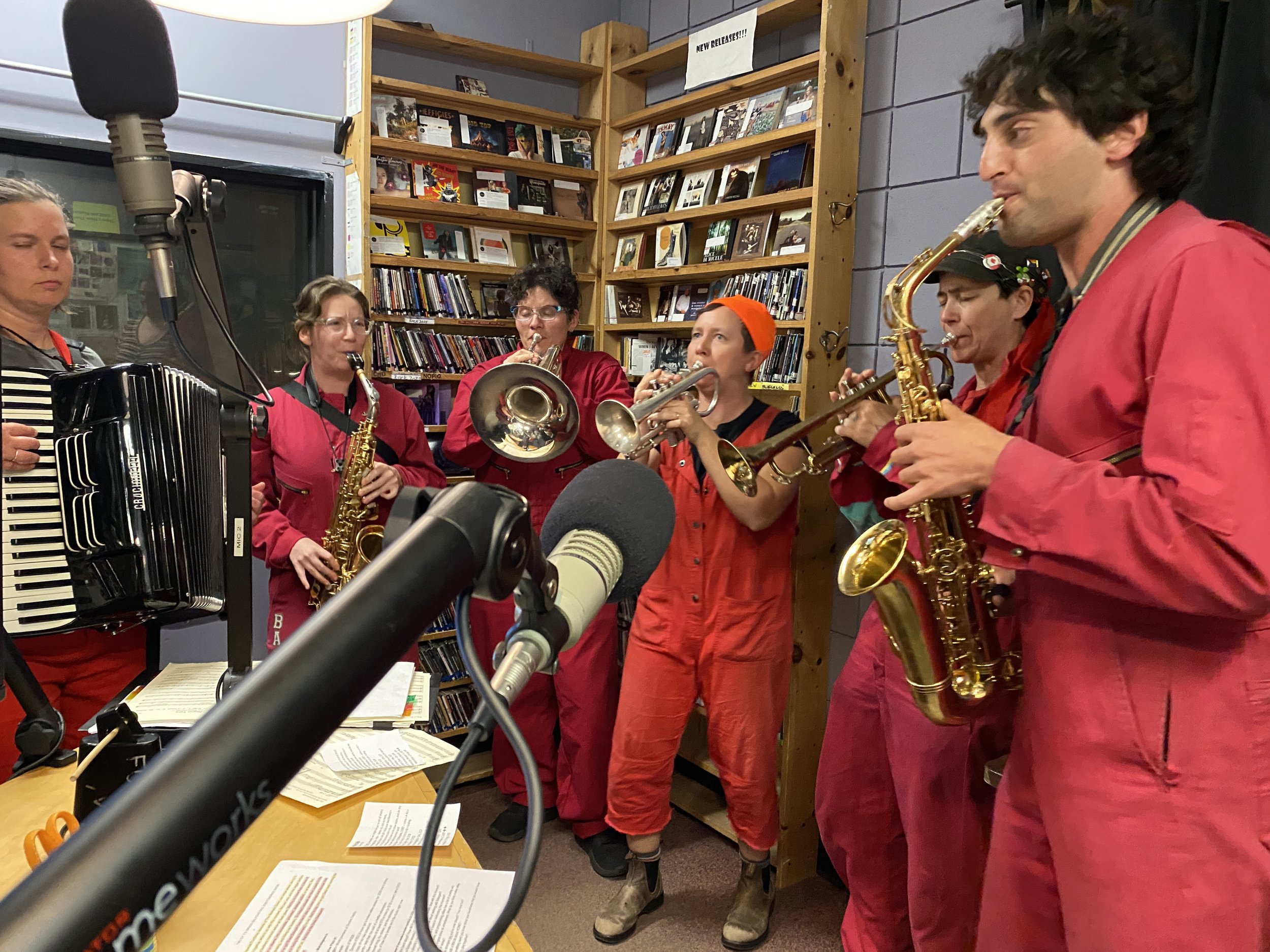
9-10pm: An extra The Moment Given with Ari and Iris, and Brass Balagan! Street brass band Brass Balagan will play some tunes live in the studio and answer questions about their role in facing this moment. If we raise $91 during the show, Brass Balagan will debut a new song they've never played in public before! If we raise more than that, the band will perform escalating stretch goals that we make up on the spot!
Monday, September 28
10-11am: Extended Cuneiform Radio with Kyle and Kind - a collaboration between Cuneiform Radio and The Good Ways Reggae Show featuring dub poetry!
2-4pm: Special Edition return of The Monday Drive at 2 with Corey!
6-9pm - Special extended Borderlands with Stefan
9-11pm - Deep Blues & Blues Edge w/ Les Mawson, showcasing legends of the blues for the fundrive.
Tuesday, September 29
9am-12pm: DJ Eben Flow Fundrive Show
12-2pm: Special edition of Now Playing with DJ Llu!
3-6pm: Extended Listen Up with Bill Nowlan
6-9pm: Extended Still Life with Club Soda & Orange Peel
9-11pm: DJ Frey Special Local Music Show - Frey will be playing all original music from Vermont bands for this Fun Drive show. There will be a diverse genre mix from folk to hip hop and a fair amount of obscure Phish and Phish adjacent songs.
Wednesday, September 30
9am-11am: Extended Quilting Hour with Sasha & Maura
1pm-4pm: Extended The Rubber Room with Dan
7-9pm: Special WoodWarbler’s JazzGrass - tune in to hear new recordings as part of Recent Releases #43. Featuring: Tony Trischka, Laurie Lewis, Big Richard, Trey Hensley, Andy Leftwich, Magoo, Joe Cirotti, Yonder Mountain String Band, Billy Strings, Old Crow Medicine Show, Bronwyn, Mr. Sun, Julian Lage, Nolatet, Five-Way Split, Club d'Elf, The Outer Worlds Jazz Ensemble, Walter Smith III and Garage a Trois.
Thursday, October 1
11am-12pm: Special Immanent Grove with Conni
6-7pm: Broken Bois Collective - tune in at 6pm EST for our first episode in a new series: Pan's Hook. What's more fun than an original retelling of the iconic Peter Pan story that investigates the complex social and cultural realities of our time while featuring a killer music soundtrack? Join us as we engage in this new, improvisational story creation process over the coming months.
Friday, October 2
7am-8am: Morning Mixtape with DJ Llu - Wake up and jump into a mix of music to get your morning started right!
12-3pm: Special Now Playing Fundrive Dance Party! Tune in for a lunchtime and afternoon dance party with DJ Llu. For the first two hours, “Dare the DJ” with requests and listen to DJ Llu make it work in the live dance party set! Then, at 2pm, tune in for a guest set and return of DJ PJ, the 9 year old local EDM DJ!
Saturday, October 3
10am-12pm: Special Swivel Radio with DJ Effrey
2pm-4pm: Box Full of Blues with John Foster - TBD on guest.
4pm-7pm: Acoustic Harmony with Mark Michaelis with musical guest Phil Henry, a Rutland-based indie artist
7-10pm: Jagler Katz Worm Hole - Extended Jagler Katz Worm Hole.
Week Two: October 4 - 11
Sunday, October 4
7am-10am: Curse of the Golden Turnip with Alan, Steven, and Ethan - Donate $50, $100, or $150 to get limited edition Curse of the Golden Turnip merch!
2-5pm: Extended Swivel Radio with DJ Effery
9-11pm: Special Show of Life with Walkin’ Will - Tune in for a special Birthday show for Phish’s Trey Anastasio, featuring music from all of Trey’s different musical projects
Monday, October 5
2-4pm: Special Edition return of The Monday Drive at 2 with Corey!
5-7pm: Special Future Reflections with DJ Syd and featuring DJ Club Soda! Tune in to hear a special game show!
9-11pm - Deep Blues & Blues Edge w/ Les Mawson, showcasing legends of the blues for the fundrive.
Tuesday, October 6
12-2pm: Special edition of Now Playing with DJ Llu!
3-6pm: An Extended Edition of Listen Up! with host Bill Nowlan.
Wednesday, October 7
9am-11am: Extended Quilting Hour with Sasha & Maura
3-5pm: Extended Country & Western Sounds in Modern Music with a northern soul hour from 3-4pm
Thursday, October 8
11am-12pm: Special Immanent Grove with Conni
2-4pm: Special edition of Now Playing with DJ Llu!
6-9pm: Extended Xav Wax with Xav and Eben Flow
Friday, October 9
7am-8am: Morning Mixtape with DJ Llu - Wake up and jump into a mix of music to get your morning started right!
1-3pm: Now Playing with DJ Llu, new music and a final push to crush those fundrive goals on the final weekend. Let's ring that cowbell early and often!
Saturday, October 10
10am-12pm: Special Swivel Radio with DJ Effrey
2pm-4pm: Box Full of Blues with John Foster - TBD on guest.
4pm-7pm: Acoustic Harmony with Mark Michaelis - TBD
7-10pm: Jagler Katz Worm Hole - Extended Jagler Katz Worm Hole.
Sunday, October 11 - Last Day of Fundrive!
7am-10am: Curse of the Golden Turnip with Alan, Steven, and Ethan - Donate $50, $100, or $150 to get limited edition Curse of the Golden Turnip merch!
2-5pm: Extended Swivel Radio with DJ Effery
7-9pm: Fundrive Wrap Dance Party on The Revel Level with DJ Emma!